Trees are one of the greatest assets any property can have. They provide shade, improve curb appeal, support local wildlife, and even increase property value. However, there are situations when a tree stops being a benefit and starts becoming a safety concern. Ignoring a declining or unstable tree can lead to property damage, costly repairs, or even personal injury.
For homeowners and property managers, knowing when a tree has reached the point where removal is the safest option can be challenging. Some trees can recover with proper care, while others continue to deteriorate despite maintenance. Understanding the warning signs helps you make informed decisions before small issues become major hazards.
Whether your property has aging trees, storm-related damage, or signs of disease, identifying the right solution early can protect your landscape and everyone who uses it. This guide explains when tree removal becomes necessary, how it compares to trimming, and what factors property owners in Laurel, MS should consider before making a decision.
Why Healthy Trees Are Worth Preserving
Removing a tree should never be the first option. Mature trees contribute to a healthier landscape by:
- Providing natural shade that reduces heat around your home
- Improving curb appeal and overall property value
- Helping prevent soil erosion
- Supporting birds and beneficial wildlife
- Enhancing air quality
Whenever a tree remains structurally sound and healthy, regular maintenance is usually enough to keep it thriving. Professional inspections can often identify issues early, allowing corrective pruning or treatment instead of complete removal.
Property Conditions That Require Tree Removal
Certain property conditions make tree removal the safest and most practical choice. While every situation should be evaluated individually, several warning signs often indicate that saving the tree is no longer possible.
Common examples include:
- Trees leaning significantly after storms
- Extensive trunk decay
- Large cavities that weaken structural stability
- Severe root damage from construction
- Trees growing dangerously close to buildings or power lines
- Dead trees that no longer produce healthy foliage
- Major structural cracks throughout the trunk
When these conditions are present, delaying removal increases the likelihood of unexpected failure during strong winds or severe weather.
Recognizing Hazardous Trees Before They Fail
Not every damaged tree falls immediately. Many hazardous trees show subtle warning signs months or even years before failure occurs.
Look for indicators such as:
- Deep vertical cracks in the trunk
- Multiple dead limbs throughout the canopy
- Mushrooms growing around the base
- Exposed or lifting roots
- Hollow sounds when tapping the trunk
- Sudden leaning or shifting after heavy rainfall
Professional evaluations help determine whether these issues are cosmetic or signs of serious structural weakness. Early identification often prevents emergency situations.
When Diseased Trees Can No Longer Be Saved
Trees can develop fungal infections, insect infestations, bacterial diseases, or internal decay that slowly destroy their structural integrity. Some diseased trees respond well to treatment if caught early, while others continue to decline regardless of intervention.
Signs of severe disease include:
- Extensive dead branches
- Peeling or missing bark
- Fungal growth around the trunk
- Discolored or undersized leaves
- Large areas of internal decay
- Repeated branch dieback every season
Once disease spreads throughout the trunk or root system, removal often becomes the safest long-term solution, especially if nearby healthy trees could become infected.
How Storm-Damaged Trees Become Long-Term Hazards
Strong storms are common across Mississippi, and trees often absorb the greatest impact. While broken limbs may seem like the only concern, hidden structural damage frequently develops beneath the bark.
Many storm-damaged trees continue standing after severe weather but become increasingly unstable over time.
Common storm-related damage includes:
- Split trunks
- Broken scaffold branches
- Torn bark exposing inner wood
- Root plate movement
- Lightning strikes
- Major canopy imbalance
After severe weather, professional inspections help determine whether restoration is possible or complete removal offers the safest outcome.
Tree Trimming vs Tree Removal: Understanding the Difference
One of the most common questions property owners ask involves tree trimming vs tree removal.
Although both services improve landscape safety, they serve very different purposes.
Tree Trimming Is Best When:
- Branches are overgrown
- Limbs interfere with roofs
- Trees need better airflow
- Dead branches require removal
- Canopies need reshaping
- Routine maintenance improves health
Tree Removal Is Recommended When:
- The tree is dead
- Structural stability is compromised
- Root systems have failed
- Disease cannot be treated
- Storm damage is beyond repair
- The tree presents an ongoing safety risk
A professional assessment ensures the least invasive solution is chosen whenever possible.
Trees Growing Too Close to Structures
As trees mature, their roots and canopies continue expanding. Unfortunately, some are planted too close to homes, garages, sidewalks, fences, or underground utilities.
Problems may include:
- Foundation movement
- Sidewalk lifting
- Roof contact
- Sewer line intrusion
- Blocked driveways
- Reduced clearance around structures
When ongoing pruning cannot eliminate these risks, removal may become the more practical long-term investment.
Why Dead Trees Should Never Be Ignored
Dead trees gradually lose moisture, making the wood brittle and unpredictable. Limbs can break without warning, and entire trunks may collapse during moderate winds.
Dead trees create risks for:
- Homes
- Vehicles
- Utility lines
- Pedestrians
- Outdoor gathering areas
Unlike healthy trees, dead trees do not recover naturally. Prompt removal significantly reduces liability and improves property safety.
Root Damage Can Be More Serious Than It Appears
Most people focus on what they can see above ground, but tree roots provide nearly all structural support.
Root damage often occurs due to:
- Construction projects
- Soil compaction
- Flooding
- Poor drainage
- Utility excavation
- Long-term erosion
Once a significant portion of the root system fails, the entire tree becomes increasingly unstable, even if the canopy still appears healthy.
When Large Trees Outgrow Residential Spaces
Large mature trees add beauty to many neighborhoods, but they can eventually outgrow their surroundings.
Over time, oversized trees may:
- Block sunlight
- Crowd neighboring trees
- Damage roofs
- Interfere with power lines
- Restrict future landscaping projects
In these situations, removal allows homeowners to redesign outdoor spaces while reducing maintenance costs and improving safety.
If your landscape also requires tree clearing services in Laurel, MS, combining multiple services into one project often creates a cleaner, more functional outdoor space.
The Importance of Professional Tree Assessments
Many tree problems cannot be accurately diagnosed through visual observation alone.
Experienced professionals evaluate:
- Internal decay
- Root stability
- Structural integrity
- Disease progression
- Canopy balance
- Future failure risk
This thorough evaluation prevents unnecessary removals while identifying trees that genuinely pose a danger.
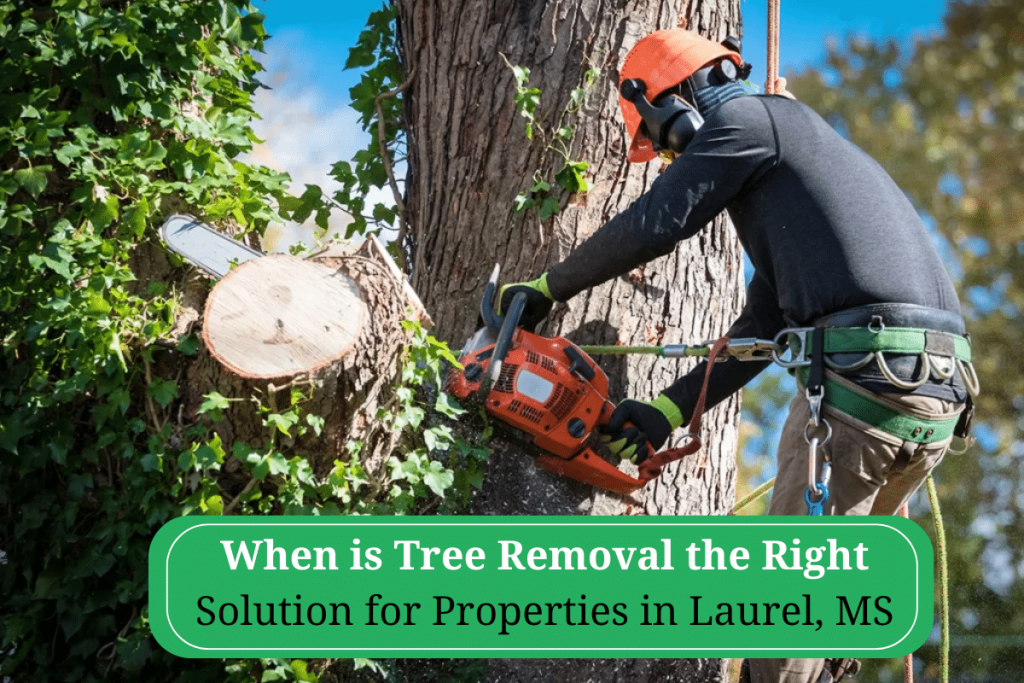
What Happens During a Safe Tree Removal Process?
Professional tree removal involves far more than cutting down a tree.
A typical process includes:
Site Inspection
The surrounding property, nearby structures, overhead utilities, and access points are evaluated.
Safety Planning
Removal techniques are selected based on tree size, condition, and location.
Controlled Removal
The tree is carefully dismantled using specialized equipment to minimize risk.
Debris Cleanup
Branches, logs, and remaining debris are removed from the property.
Stump Considerations
Depending on future landscaping plans, stump grinding or removal may also be recommended.
Preventive Maintenance Can Delay Future Tree Removal
Although some trees eventually require removal, regular maintenance helps many remain healthy for decades.
Preventive care includes:
- Routine inspections
- Proper pruning
- Soil management
- Disease monitoring
- Pest control
- Early storm damage assessment
Investing in preventive maintenance often reduces emergency situations while extending the life of valuable landscape trees.
FAQs
How do I know if a tree should be removed instead of trimmed?
If the tree has severe structural damage, advanced decay, major root failure, or irreversible disease, removal is usually safer than trimming. A professional inspection can determine the best option.
Can a leaning tree still be saved?
It depends on why the tree is leaning. Minor natural lean is often harmless, but sudden leaning after storms or root damage may indicate structural failure that requires removal.
Should storm-damaged trees always be removed?
No. Some trees recover successfully with proper pruning. However, trees with split trunks, severe root damage, or extensive structural failure often require removal for safety.
Can diseased trees spread problems to nearby trees?
Yes. Certain fungal infections, insects, and bacterial diseases can spread to surrounding healthy trees if the affected tree is not properly managed.
Is removing a dead tree urgent?
Yes. Dead trees become increasingly unstable over time and may fail without warning, especially during high winds or heavy rain.
Summary
Knowing when tree removal is the right solution protects both your property and the people around it. While many trees can remain healthy with proper maintenance, others become too damaged, diseased, or unstable to safely preserve. Recognizing warning signs early allows property owners to make informed decisions before costly emergencies occur. When expert guidance is needed, The Treeminator LLC provides professional tree care solutions designed to help property owners maintain safe, healthy, and attractive landscapes throughout Laurel, MS.