
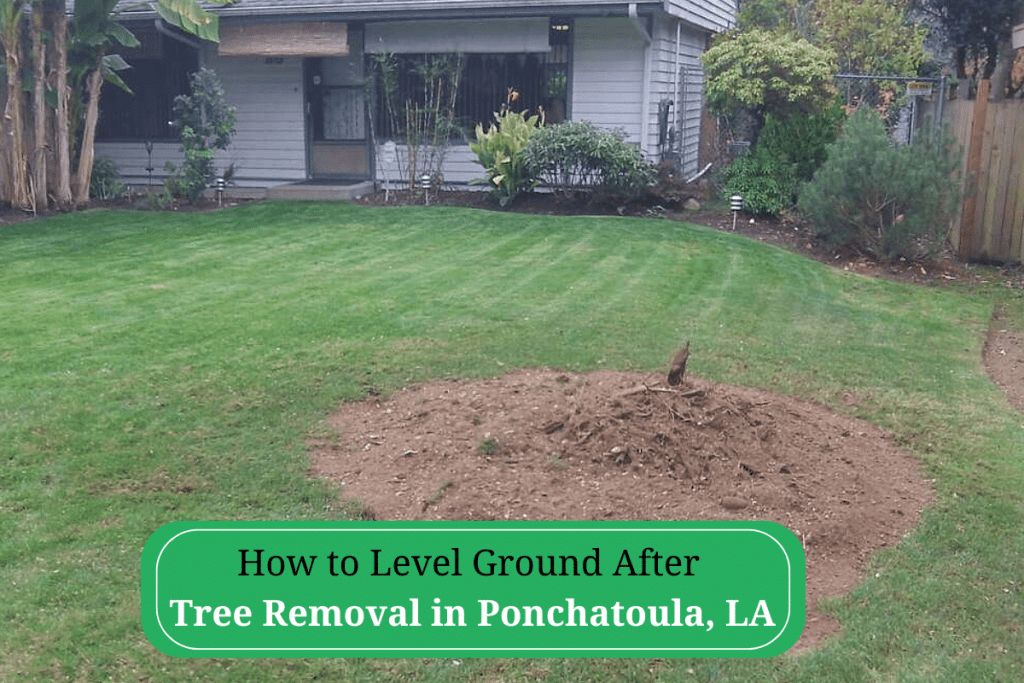
Removing a tree from your property is often necessary for safety, aesthetics, or future construction. However, once the tree is gone, homeowners in Ponchatoula, LA are often left with uneven ground, exposed roots, compacted soil, or large holes where the stump once stood. If not addressed properly, this uneven terrain can lead to drainage issues, foundation concerns, and an unpolished landscape.
This comprehensive guide explains how to level ground after tree removal in Ponchatoula, LA, using proven techniques that protect your property and restore long-term usability. Whether you plan to reseed your lawn, install landscaping, or prepare for construction, proper ground leveling is a critical final step.
Understanding Why Ground Leveling Is Essential After Tree Removal
Tree removal doesn’t end when the trunk is cut down. Beneath the surface, roots decay, soil settles, and voids form. Without professional-level preparation, these changes can cause sinking areas, water pooling, or tripping hazards. Ground leveling helps stabilize the soil and ensures your land remains functional and visually appealing.
In Ponchatoula’s humid climate, where rainfall can be heavy and soil composition varies, neglecting proper grading can quickly escalate into erosion or drainage problems. Homeowners who invest time in proper ground leveling benefit from safer outdoor spaces and fewer future repairs.
Evaluating the Site After Tree Removal Services
Before any leveling begins, the site must be carefully assessed. This evaluation stage determines the approach, materials, and equipment needed.
Key elements to inspect include:
- Depth and width of the stump cavity
- Remaining surface or underground roots
- Soil compaction levels
- Natural slope and drainage direction
Many homeowners hire tree services that also offer site preparation. If your tree clearing company removed the tree but did not level the ground, this assessment step becomes even more important to avoid mistakes during DIY restoration.
Step 1: Remove Remaining Roots and Organic Debris
After the tree is removed, leftover roots and wood debris must be cleared. Decaying organic matter causes soil collapse over time, leading to uneven ground months later.
Use root saws, axes, or mechanical tools to remove large roots near the surface. Smaller roots should be dug out or treated so they do not interfere with soil stability. This step ensures a clean base for effective ground leveling and prevents future sinkholes.
Step 2: Address Stump Holes and Depressions Properly
Stump removal often leaves behind a large cavity that cannot simply be filled with loose soil. Improper filling leads to soil settling and uneven surfaces.
Best practices include:
- Filling the hole in layers
- Using a mix of topsoil and structural fill
- Compacting each layer thoroughly
Avoid using mulch or untreated organic matter as filler. These materials decompose and create voids over time. Proper filling is one of the most critical steps when learning how to level ground after tree removal in Ponchatoula, LA.
Step 3: Improve Soil Quality for Long-Term Stability
Tree removal often leaves behind compacted or nutrient-depleted soil. Before leveling, test the soil texture and composition. Sandy soils drain quickly but may shift, while clay soils retain moisture and require careful grading.
Enhance soil quality by:
- Mixing topsoil with existing soil
- Adding soil conditioners if necessary
- Removing rocks and construction debris
Balanced soil improves compaction, drainage, and surface durability, which is essential for lawns and landscaping in southern Louisiana.
Step 4: Compact the Soil to Prevent Future Settling
Soil compaction is the backbone of professional ground leveling. Without compaction, even the best grading job can fail within months.
Use manual tampers for small areas or plate compactors for larger spaces. Compact the soil gradually, checking firmness after each pass. Proper compaction reduces air pockets and ensures the surface remains level despite heavy rain or foot traffic.
Step 5: Grade the Area for Proper Drainage
Grading is the process of shaping the land to control water flow. In Ponchatoula, where rainfall can be unpredictable, proper grading prevents water from pooling near foundations or landscaped areas.
Slope the ground gently away from structures while maintaining a natural look. Avoid steep slopes that can erode quickly. This step is often where experienced professionals outperform DIY attempts, as incorrect grading can worsen drainage issues instead of fixing them.
Step 6: Final Ground Leveling and Surface Preparation
Once the soil is compacted and graded, the final leveling begins. Use rakes and leveling bars to smooth the surface evenly. This step ensures uniform height across the area and prepares the land for sod, grass seed, or landscaping features.
At this stage, homeowners often coordinate with tree removal services in Ponchatoula that provide additional land preparation support, ensuring the finished surface is both functional and visually consistent with the rest of the property.
Step 7: Lawn Restoration or Landscape Installation
With the ground fully leveled, you can restore the area based on your goals:
- Seed or sod installation
- Mulch beds or garden features
- Walkways or hardscape foundations
Water the area lightly and monitor soil movement during the first few weeks. Minor adjustments may be needed as the soil settles naturally.
When to Hire a Professional Tree Clearing Company
While small projects can be managed independently, larger properties or multiple tree removals often require professional assistance. A qualified tree clearing company brings experience, heavy equipment, and knowledge of local soil conditions.
Professionals reduce the risk of improper compaction, drainage failures, and uneven grading. This is especially important for properties preparing for construction or long-term landscaping investments.
Common Mistakes Homeowners Should Avoid
Avoiding errors can save time and money. Common mistakes include:
- Skipping soil compaction
- Using organic debris as filler
- Ignoring drainage slopes
- Rushing final leveling
Understanding these pitfalls helps homeowners achieve professional-level results without repeated repairs.
FAQs
How long should I wait to level ground after tree removal?
Ground leveling should begin immediately after stump and root removal to prevent soil collapse and erosion.
Can I use existing soil to fill stump holes?
Yes, but it should be mixed with quality topsoil and compacted in layers for best results.
Is ground leveling necessary if I’m not planting grass?
Yes. Uneven ground can create safety hazards and drainage issues even if the area is not landscaped.
How deep should stump holes be filled?
Stump cavities should be filled completely to the original ground level, ensuring full compaction throughout.
Does ground leveling improve property value?
Yes. A level, well-drained yard enhances usability, safety, and overall curb appeal.
Summary
Learning how to level ground after tree removal in Ponchatoula, LA is essential for protecting your property and maximizing the benefits of tree removal. From root cleanup and soil compaction to grading and final leveling, each step plays a role in long-term stability and appearance.
For homeowners seeking reliable, professional support, The Treeminator LLC provides expert solutions backed by experience, proper equipment, and a commitment to quality results. With the right approach, your land can transition from disrupted terrain to a smooth, usable surface built to last.